

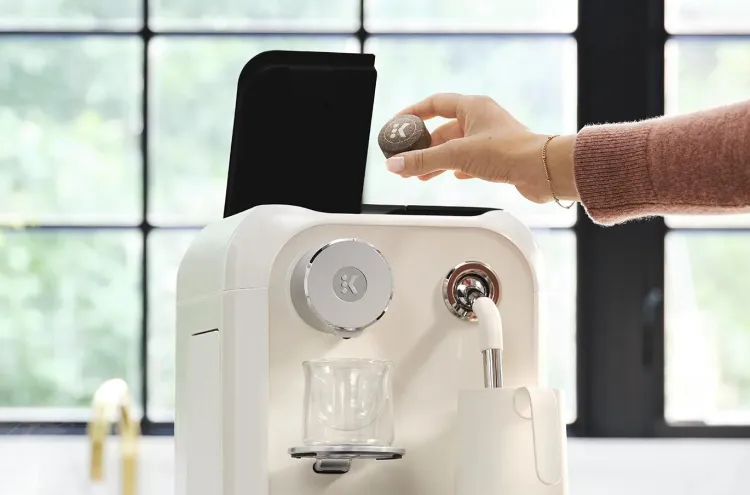
Keurig Dr Pepper is rolling out a new single-serve coffee system that replaces the familiar plastic K-Cup with a compressed puck of coffee wrapped in a plant-based coating, a potentially significant reduction in one of the most visible sources of waste associated with pod coffee.
But describing the new system simply as “plastic-free” leaves out some important context.
The new AltaRounds contain pressed ground coffee surrounded by a proprietary plant-based coating made with alginate derived from seaweed. The spent rounds are designed for home composting. Keurig says they should disintegrate in roughly 12 to 16 weeks and fully biodegrade in about six months.
The underlying technology was licensed from Swiss company Delica and adapted from its CoffeeB system.
The Round Is Plastic-Free. Its Wrapper Is Not.
The coffee puck itself eliminates the rigid plastic capsule used in conventional K-Cups. However, each AltaRound is currently individually wrapped in plastic to preserve freshness.
Keurig has said it intends to transition those wrappers to paper over the next several years. The freshness issue is significant: Keurig told CNET that a wrapped AltaRound has a shelf life of about nine months, while an unwrapped round remains fresh for about 30 days.
That means the new system reduces plastic associated with the brewing capsule, but does not yet eliminate plastic from the product’s packaging.
Consumers Will Need a New Machine
AltaRounds cannot be used in existing Keurig brewers. Consumers who want to use the new format will need a Keurig Alta brewer.
The new machine is backward-compatible with traditional K-Cups, but the reverse is not true: AltaRounds will not work in older Keurig machines.
An early Alta package priced at $499.99 sold out. The current package includes the brewer, six boxes of coffee and glassware, with shipments scheduled to begin Oct. 21. The new rounds work out to roughly $1.37 per serving.
That requirement matters when assessing the environmental benefit. Replacing a functioning appliance with a new one creates its own manufacturing, shipping and disposal footprint, even if the consumable used by the new machine contains less plastic.
Keurig Has Been Here Before on Recycling Claims
Keurig’s environmental marketing also comes with some history.
In 2024, the company agreed to pay $1.5 million to settle a Securities and Exchange Commission case involving disclosures about the recyclability of its K-Cup pods. The issue was not that polypropylene K-Cups were physically incapable of being recycled. Rather, the SEC said Keurig failed to fully disclose that two large recycling companies had expressed significant concerns about the commercial feasibility of accepting the pods.
In other words, “recyclable” on paper did not necessarily mean the product would actually be accepted and recycled in local waste systems.
SEC Commissioner Hester Peirce dissented from the enforcement action, arguing that the agency was stretching securities law into an area better addressed through other regulatory mechanisms. The disagreement did not change the settlement, but it underscored the distinction between a material being technically recyclable and a recycling system actually handling it.
Coffee’s Environmental Footprint Is Bigger Than the Pod
The environmental debate surrounding single-serve coffee also tends to focus heavily on the discarded capsule because it is the part consumers can see. Lifecycle research suggests the larger picture is more complicated.
Studies of coffee systems generally find that growing and producing the coffee itself accounts for a much larger share of total environmental impact than the packaging. In lifecycle reviews of pod systems, coffee production has represented roughly 63% of the median impact, while packaging has accounted for about 18%.
Brewing efficiency, electricity use, wasted coffee, milk or creamer, agricultural practices and the lifespan of the coffee maker can all materially affect the total footprint.
Single-serve systems can sometimes offset part of their packaging disadvantage by controlling portion size and reducing wasted brewed coffee. On the other hand, replacing a working brewer solely to adopt a new pod format adds an appliance-level impact that is not captured by simply comparing a K-Cup with an AltaRound.
For now, the technology appears to be a genuine reduction in one form of disposable plastic waste, but it is not yet the plastic-free coffee system the shorthand headlines might suggest.