
Mexico’s president has legitimate grounds to resist unilateral U.S. operations on Mexican soil. But the latest dispute centers largely on sanctions, visa restrictions and criminal cases involving figures close to her ruling party, while Mexican authorities themselves have found financial irregularities sufficient to take action.
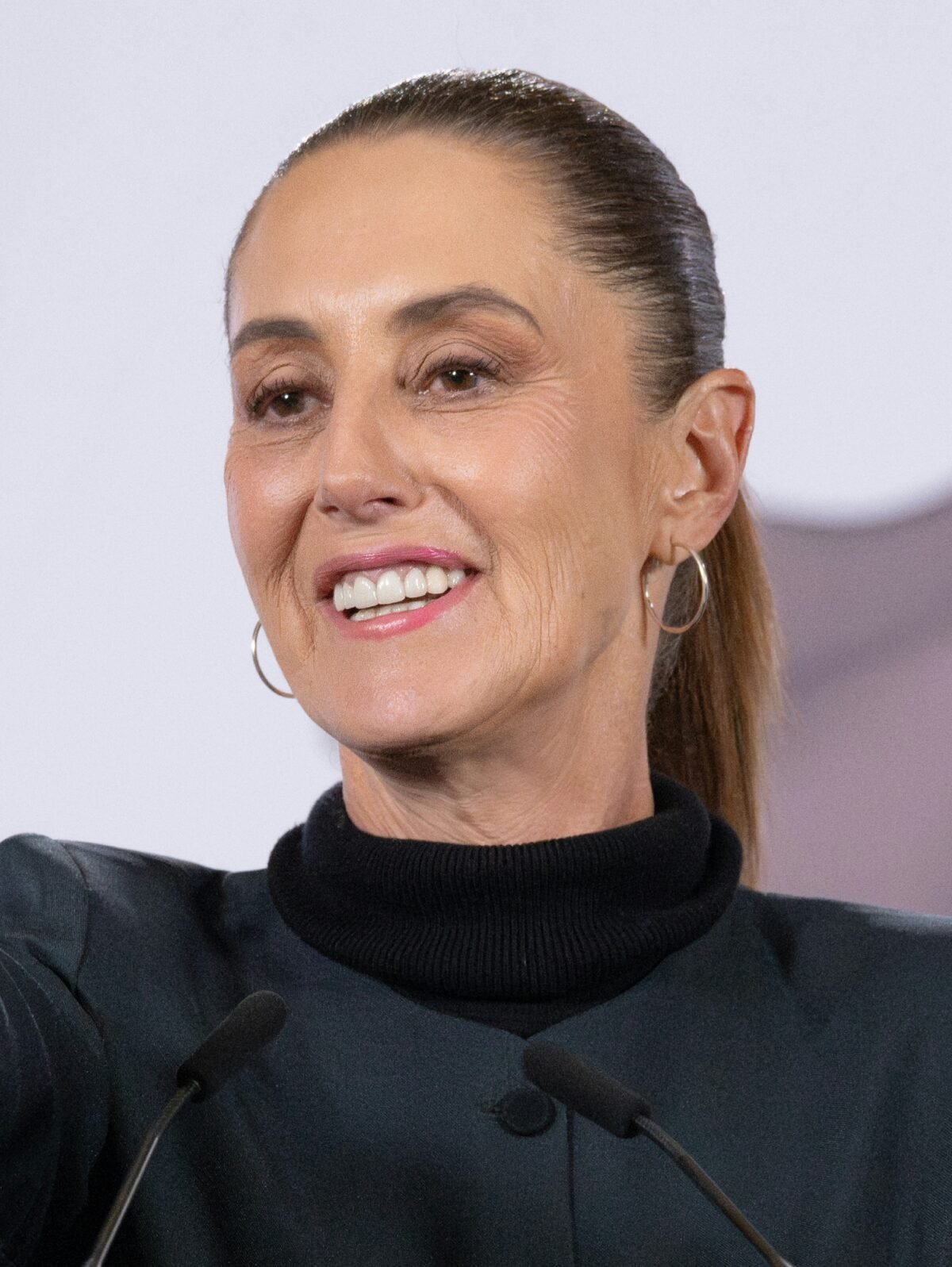
Mexican President Claudia Sheinbaum is sharpening her criticism of Washington as U.S. investigations into the Sinaloa Cartel increasingly reach politicians and former officials connected to her ruling Morena party.
Sheinbaum has framed the growing pressure as a question of Mexican sovereignty, warning publicly that Mexico will not accept “interference, interventionism, or violations of our territorial integrity.”
That argument has substantial force when applied to repeated suggestions from President Donald Trump that the United States could take unilateral military action against cartels inside Mexico. Trump has repeatedly raised that possibility, and his administration has increasingly used military power against organizations it designates as narcoterrorist groups elsewhere in the Western Hemisphere. Earlier this year, Reuters reported that Trump had repeatedly threatened unilateral military action in Mexico even as U.S. intelligence assisted a Mexican operation that killed Jalisco New Generation Cartel leader Nemesio Oseguera, known as “El Mencho.”
But the immediate confrontation over U.S. sanctions presents a different sovereignty question.
On Sept. 29, the U.S. Treasury Department sanctioned 21 people and 25 entities it said were connected to the Sinaloa Cartel, including alleged traffickers, money launderers, business fronts and political facilitators operating in Baja California. The sanctions block property under U.S. jurisdiction and generally prohibit U.S. persons from doing business with those designated. Treasury can also impose consequences on foreign financial institutions that knowingly facilitate significant transactions for sanctioned parties.
Those measures can have severe economic effects in Mexico because of the two countries’ interconnected banking systems. But an OFAC designation is not, by itself, a U.S. seizure of Mexican territory or the deployment of American authorities inside Mexico.
Mexico Made Its Own Decision to Block Accounts
Mexico’s Financial Intelligence Unit, or UIF, said it reviewed financial information on the people and companies designated by Washington and found risky transactions and irregularities reported by Mexican financial institutions among some of the subjects. It then placed the designated parties on Mexico’s blocked-persons list as a preventive administrative action. The UIF explicitly said the measure did not establish criminal responsibility.
That distinction complicates claims that the account freezes themselves represent an assault on Mexican sovereignty.
Mexico’s Supreme Court has previously ruled that the UIF may impose a financial block pursuant to an express request from a foreign authority when implementing an international obligation. The court specifically said such a request does not violate Mexican sovereignty because Mexico is carrying out obligations it has accepted under international agreements. Whether every procedural requirement of that precedent applies to the latest freezes is a separate legal question, but the ruling undermines the broader proposition that foreign-triggered financial cooperation is inherently an infringement on sovereignty.
U.S. Allegations Reach the Governor’s Inner Circle
The most politically sensitive allegations involve Carlos Alberto Torres Torres, the former husband of Baja California Gov. Marina del Pilar Ávila, a prominent Morena politician.
Treasury described Torres as a “cartel-linked political operator” allied with Jesús Alejandro Sánchez Félix, known as “El Ruso,” a Sinaloa Cartel figure whose faction controls trafficking territory around Mexicali.
According to Treasury, Torres used political influence to shield cartel activity from government intervention. U.S. officials allege former Mexicali security director Pedro Ariel Mendívil García accepted cartel bribes and made monthly payments to Torres, while Torres’ brother Luis allegedly handled bribes and laundered illicit money through businesses and political campaigns.
These are U.S. government allegations, not criminal convictions.
But the scrutiny of Torres did not originate solely in Washington.
Ávila confirmed in January that Mexico’s own federal Attorney General’s Office was investigating her former husband for alleged arms trafficking, drug trafficking and money laundering. That investigation reportedly followed an anonymous complaint filed in June 2025. Torres denied wrongdoing and said the inquiry resulted from an unsupported anonymous allegation.
There is another politically awkward connection. Mexican corporate records reviewed by El País showed that Ávila, while mayor of Mexicali, had been among the original investors in Vida Orgánica Tijuana, a business founded with Torres and other partners. Treasury later sanctioned the company as part of the network it attributed to Torres’ brother. Records indicated Ávila transferred her interest years before the latest U.S. sanctions, and Treasury did not sanction the governor herself.
The State Department had already revoked the U.S. visas of both Ávila and Torres in May 2025. Treasury now says Torres’ visa was revoked because of his alleged cartel affiliation and work on behalf of the Sinaloa Cartel. The U.S. has not publicly accused Ávila of participating in that activity.
A Larger Confrontation Over Morena Officials
The Baja California case follows an even more serious U.S. prosecution involving former Sinaloa Gov. Rubén Rocha Moya and other Mexican officials.
A federal indictment unsealed in April accused Rocha and nine current or former government and law-enforcement officials of conspiring with the Chapitos faction of the Sinaloa Cartel.
Prosecutors allege cartel leaders helped Rocha win the 2021 governor’s race through intimidation and kidnapping of political rivals and that Rocha subsequently protected cartel operations. Other defendants are accused of leaking law-enforcement information, protecting drug shipments and accepting regular cartel payments. One former police commander is accused of assisting in the kidnapping of a DEA source and a relative who were later tortured and killed.
Those allegations have not been proven in court, and the defendants are presumed innocent.
Sheinbaum has demanded what she describes as clear evidence before Mexico agrees to extradite Rocha and has warned that allowing Washington to determine the fate of Mexican politicians could eventually permit U.S. law-enforcement agencies to influence Mexican elections.
That is a legitimate due-process concern in principle. An American indictment is not a Mexican conviction, and foreign criminal allegations should not automatically determine who may hold office in another country.
But the political context cannot be ignored.
The cases increasingly touch officials and political networks associated with Morena. Sheinbaum has therefore been able to frame a potentially damaging discussion about corruption and cartel penetration of government as a broader conflict between Mexico and the United States.
That framing does not prove that she is protecting guilty allies. It does, however, shift the political question from whether specific Morena-linked figures have corrupt relationships with criminal organizations to whether Washington has the right to investigate or sanction Mexican political actors at all.
Those are not the same question.
Sheinbaum Has Not Stopped Cooperating With Washington
There is also substantial evidence against portraying Sheinbaum as simply unwilling to confront the cartels.
Her security policy has been considerably more aggressive than that of her predecessor and political mentor, Andrés Manuel López Obrador.
Mexico says it has arrested tens of thousands of people for serious crimes under Sheinbaum and transferred 92 high-priority criminal suspects to the United States. In February, Mexican forces carried out the operation that killed El Mencho, one of the most powerful cartel leaders in the country. U.S. intelligence assisted, but Mexican forces conducted the operation.
Preliminary Mexican government figures also showed the daily homicide rate falling from 86.9 killings in September 2024 to 52.4 in December 2025, a decline of nearly 40 percent. Reuters noted that those figures are preliminary and are often revised upward by Mexico’s national statistics agency. Disappearances remained a serious counterpoint, with the national registry recording a rise during Sheinbaum’s first year.
Those actions suggest Sheinbaum’s dispute with Washington is not simply opposition to anti-cartel enforcement. The conflict is increasingly about who controls that enforcement, what evidentiary threshold is required when Mexican political figures are implicated and how much unilateral pressure Washington can exert.
Mexico Also Has a Legitimate Complaint About Shared Responsibility
Sheinbaum is also correct that the cartel problem is not exclusively Mexican.
American consumers provide an enormous market for illegal drugs, while American firearms flow south to criminal organizations.
A September Government Accountability Office report found that 68 percent of firearms recovered in Mexico and traced by U.S. authorities between 2020 and 2024 had a U.S. source. ATF data for 2025 put the figure at 71 percent among firearms submitted for tracing, although ATF cautions that traced firearms are not a representative sample of every gun used in Mexican crime.
Mexico therefore has factual grounds for insisting that security cooperation include American drug demand, money laundering and southbound weapons rather than treating organized crime solely as a Mexican failure.
That argument, however, does not resolve the allegations against individual Mexican officials.
Sovereignty and Political Accountability Are Separate Questions
Sheinbaum’s sovereignty argument is strongest when Washington discusses military operations, unauthorized intelligence activity or other actions conducted physically inside Mexico without Mexican consent.
It is considerably weaker when applied to the United States deciding who may enter U.S. territory, prosecuting alleged conspiracies to import narcotics into the United States, or restricting access to the American financial system.
OFAC sanctions can exert considerable economic leverage outside U.S. borders, particularly because foreign banks depend on access to U.S. correspondent accounts. That gives Mexico reasonable grounds to criticize Washington’s financial reach and demand credible evidence.
But financial leverage is not the same thing as a violation of territorial integrity.
And in the latest Baja California case, Mexican institutions have not simply rejected the American allegations. Mexico’s federal prosecutors were already investigating Carlos Torres, while its own financial-intelligence agency said its review identified transactions serious enough to justify preventive account blocks.
None of that proves that Torres, Rocha or any other accused official committed the offenses alleged by Washington.
It does mean that the controversy cannot accurately be reduced to the United States manufacturing accusations against Mexico without any corroborating concerns inside Mexico itself.
Sheinbaum is navigating two real pressures at once: an American administration willing to push the limits of U.S. power against cartels, and a growing series of allegations involving politicians connected to her own movement.
Defending Mexico from unauthorized foreign intervention is a legitimate responsibility of any Mexican president.
Determining whether that principle is also being used to blunt politically damaging scrutiny of Morena officials is a separate question, and one that will increasingly depend on what Mexican investigators themselves uncover.
Photo: Claudia Sheinbaum during a Jan. 21, 2026 press conference. Eneas De Troya via Wikimedia Commons. Licensed under CC BY 4.0. Source image.
