


Federal cases involving nonexistent jobs, improper visa use and discriminatory recruitment add context to the administration’s action. The Microsoft investigation itself has not produced a public finding of wrongdoing.
WASHINGTON, Oct. 8, 2026. The Trump administration has suspended Microsoft and several major technology companies from the Permanent Labor Certification (PERM) process used to sponsor foreign workers for employment-based green cards, as officials investigate whether the program was used in ways that disadvantaged American workers.
Vice President JD Vance accused employers of using foreign-worker immigration programs while laying off U.S. employees. Companies named in the action include Microsoft, Adobe, Cognizant, Infosys, Tata Consultancy Services, Wipro, HCL Technologies and Capgemini.
The suspension affects PERM processing, not the validity of all existing H-1B visas. H-1B is a temporary specialty-occupation visa; PERM is generally a labor-certification step toward employment-based permanent residency. Federal investigators have previously documented abuses affecting both systems, including some at major companies.
Microsoft layoffs raise questions about continued foreign-worker recruitment
Vance singled out Microsoft, pointing to approximately 6,000 layoffs alongside about 6,300 H-1B approvals and nearly 3,000 green cards. The vice president argued that the figures illustrate a system in which companies eliminate American jobs while continuing to employ foreign workers.
Microsoft’s reductions were broader than the May 2025 round Vance highlighted. The company announced approximately 6,000 job cuts that May and another 9,000 in July, across its global operations. Those figures should not all be described as layoffs of American employees.
Federal fiscal-year 2025 figures show about 6,258 H-1B approvals associated with Microsoft, including 4,864 for continuing employment and 1,394 for initial employment. Microsoft says most petitions involved existing employees and disputes the suggestion that thousands of new foreign workers directly replaced laid-off Americans.
That distinction matters, but it does not settle whether the company properly complied with labor-market recruitment requirements for permanent residency. The PERM investigation focuses on whether qualified U.S. workers received genuine opportunities to apply for positions sponsored for green cards.
Infosys previously paid $34 million in immigration settlement
Infosys, one of the companies named in Thursday’s suspension, previously agreed to pay $34 million to settle federal allegations involving systemic immigration-related misconduct. The 2013 settlement arose from allegations that the company used B-1 visitor visas to bring employees to the United States to perform work requiring appropriate employment authorization. Federal authorities alleged that misleading invitation letters and statements obscured the actual work.
The settlement concerned historical conduct and is not proof of new wrongdoing in 2026. It is, however, directly relevant background for renewed scrutiny of the company’s immigration practices. Justice Department settlement announcement.
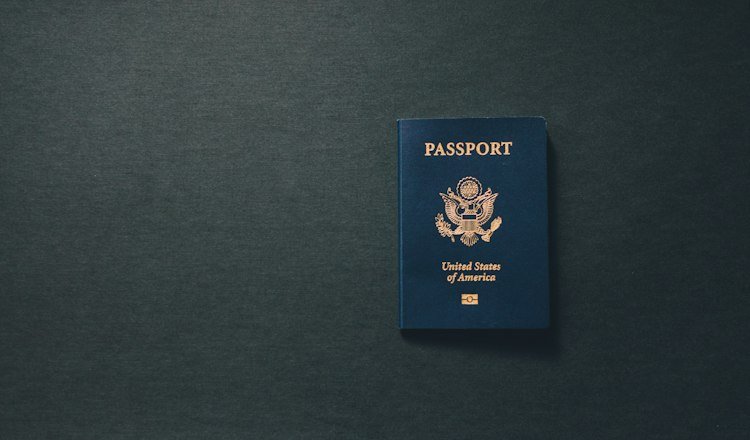
Criminal prosecutions reveal fictitious H-1B employment
Federal prosecutors have pursued cases in which employers invented jobs or client placements to secure work visas. In April 2025, California staffing executive Kishore Dattapuram was sentenced to 14 months in prison after pleading guilty in a visa fraud scheme involving supposed positions at client companies that did not exist.
In April 2026, Sampath Rajidi and Sreedhar Mada pleaded guilty to conspiring to submit fraudulent H-1B petitions for purported University of California positions. The supposed university jobs did not exist, according to prosecutors, and the workers were instead marketed to other employers.
These cases show that the weakness is not limited to wage disputes. Visa paperwork can portray a genuine specialty occupation and an actual employer relationship even when the claimed employment arrangement is fictitious. Justice Department, April 2025; Justice Department, April 2026.
False academic credentials and document fraud
H-1B eligibility generally involves a specialty occupation requiring specialized knowledge and at least a bachelor’s degree or equivalent qualifications in a directly related field. That formal requirement does not mean every document submitted in support of a petition is genuine.
Federal authorities have investigated forged educational documents, fabricated employment records, false client contracts and unauthorized signatures. A federal case involving alleged forged advanced-degree diplomas and transcripts illustrates that credential fraud is not merely a theoretical possibility.
There have also been investigations in India involving allegedly falsified academic records associated with U.S. visa applications. But individual cases cannot establish how widespread credential fraud is among Indian H-1B recipients. Nationality alone is not evidence of deception, and a reliable current fraud rate specific to Indian applicants has not been demonstrated.
Federal auditors documented substantial compliance problems
Long before the current administration, federal auditors identified fraud and technical violations in H-1B petitions. A USCIS assessment of a sample of petitions filed in 2005 and 2006 reported fraud in approximately 13.4% and technical violations in another 7.3%, a combined 20.7%. Problems included misleading employment information, document irregularities, wage discrepancies and improper fee arrangements.
The assessment is historical: it is not a valid estimate of the fraud rate in 2026. But it demonstrates that the program’s vulnerabilities were significant enough to be measured by federal investigators. USCIS congressional testimony.
A separate Government Accountability Office study found that 54% of H-1B workers covered by labor-condition applications in a June 2009–July 2010 dataset were classified in entry-level prevailing-wage categories. Entry-level specialty positions are not inherently fraudulent, but the finding complicates claims that the program is limited to exceptionally senior or rare technical experts. GAO report.
Most H-1B hiring does not require proving no Americans are available
A common misconception is that a U.S. company must first establish that no qualified American can fill a job before hiring an H-1B worker. Most H-1B employers do not face that general requirement. Additional recruitment and nondisplacement duties apply to some H-1B-dependent employers and willful violators, subject to exemptions.
Employers must comply with applicable wage rules, which generally require payment of the higher of the prevailing wage or the actual wage paid to comparable employees. But the prevailing wage system contains job classifications and experience levels; compliance with a lower classification is not inherently illegal if the work is accurately categorized.
PERM is different. Employers sponsoring foreign workers for permanent residency must perform specified U.S. recruitment and assess qualified applicants under labor-certification rules. That is why alleged manipulation of PERM advertising and hiring practices can be actionable without proving a direct one-for-one substitution for every laid-off worker.

Justice Department settlements document discrimination against U.S. applicants
Federal investigations have found that major companies used PERM recruitment procedures that hindered American applicants.
In 2023, Apple agreed to a settlement of up to $25 million after investigators determined that certain PERM positions were not advertised through its normal external careers site and that applicants faced paper-application requirements unlike those in routine recruiting.
Facebook, now Meta, settled a federal case in 2021 involving allegations that its practices discouraged U.S. workers from seeking positions intended for temporary visa holders. The agreement included a $4.75 million civil penalty and up to $9.5 million for eligible workers.
In August 2026, the Justice Department announced a $3.2 million settlement with OpenAI and subsidiary Statsig concerning recruitment practices for fewer than ten PERM positions, including different application methods from their usual electronic process.
These are concrete examples of discriminatory recruiting practices. Settlements do not establish misconduct by Microsoft, but they demonstrate that the federal government’s concerns have a substantial documented foundation. DOJ Civil Rights Division settlements.
Multiple H-1B registrations exposed lottery manipulation risks
USCIS reported 758,994 eligible H-1B registrations for fiscal year 2024, including 408,891 associated with beneficiaries having multiple eligible registrations. The agency expressed concern that some registrants might be coordinating multiple employer entries to increase the chances of selection.
Multiple registrations were not automatically fraudulent; legitimate independent employers could seek the same worker. USCIS later implemented a beneficiary-centered selection system designed to reduce manipulation by counting individuals rather than giving a person separate chances for each registration.
Foreign workers can also be victims of illegal practices
Fraudulent sponsorship can injure American applicants and foreign employees alike. Prosecuted staffing schemes have involved unpaid or underpaid wages, improper charges and workers arriving without the promised assignments. Workers whose immigration status depends heavily on sponsoring employers may hesitate to complain or change employers.
Supporters of skilled immigration argue that H-1B and related programs help American businesses retain engineers, researchers and specialists and compete for international talent. The legitimate uses of those programs must be distinguished from fabricated jobs, unlawful wage practices and discriminatory recruitment.
Universities and outsourcing companies face wider scrutiny
The administration also identified Harvard, Yale, Stanford, Brown, MIT, Caltech, Arizona State, the University of Pittsburgh and the University of California, Davis for investigation concerning J-1 exchange programs. Officials cited potential visa misuse, wage effects and foreign-influence concerns. No findings of fraud against those institutions were announced Thursday.
A separate proposal would impose substantial fees on some foreign students seeking employment authorization through Optional Practical Training. That proposal has not become an operative fee requirement and remains subject to the federal regulatory process.
Documented history, but Microsoft-specific findings remain outstanding
The administration’s investigation is not occurring in an evidentiary vacuum. Federal prosecutions and settlements have documented fraudulent H-1B petitions, fictitious jobs, discriminatory recruitment, visa-classification misuse and wage violations over multiple administrations.
Those precedents also do not establish that Microsoft, Adobe or every company named Thursday committed comparable wrongdoing. Reviewing their recruitment records, certifications, wage information and employment arrangements is necessary to evaluate the specific allegations.
Thursday’s suspension is an administrative action during an investigation rather than a final judicial finding. The central question is whether companies used federal employment-based immigration programs to meet legitimate labor needs or manipulated recruitment in ways that deprived qualified American workers of fair access to jobs.
Verification notes and primary sources
The following records underpin the article. An official prosecution, settlement or audit establishes the described historical action; it is not evidence that every company in the current investigation committed the same conduct.
- Reuters, Oct. 8, 2026: current suspension and administration statements.
- DOJ, 2013: Infosys $34 million settlement.
- DOJ, 2025: staffing executive sentenced in H-1B fraud case.
- DOJ, 2026: fictitious university job H-1B conspiracy.
- USCIS testimony: historical fraud and technical-violation assessment.
- GAO-11-26: wage-level and oversight analysis.
- DOJ Civil Rights Division: employment discrimination settlements.
- DOL OIG, July 2026: investigation announcement.
Scope and limitations: The frequently cited USCIS 20.7% fraud/technical-violation figure comes from a historical petition sample and cannot be treated as the current nationwide fraud rate. Individual forged-credential cases do not establish how prevalent such fraud is among Indian applicants. Similarly, Microsoft H-1B approvals include continuing-employment petitions and should not all be characterized as newly hired replacements.