

Higher power bills, equipment repairs and store-level setbacks complicate the retailer’s automation investment.
Walmart’s multibillion-dollar effort to automate its supply chain is encountering obstacles as ordinary as cardboard boxes and dust, alongside equipment breakdowns and higher power bills, The Wall Street Journal reported last week.
The retailer is pressing ahead. Rob Montgomery, who runs supply-chain operations for Walmart U.S., told the Journal that the overhaul has reached its most complicated stage. Work is underway at most of the company’s roughly 200 U.S. supply-chain buildings.
About 80% of the projects involve retrofitting older facilities, many built in the 1980s and 1990s, according to the Journal. Walmart is rebuilding them while keeping merchandise moving to stores and customers.
Even the shipping carton had to change. Walmart’s longtime reusable box, costing about $1 apiece, is too large for the new equipment, the Journal reported. Its replacement is 1.5 inches shorter and requires tape to close. That adds work and expense, although Montgomery said the new box would reduce stocking time in stores.

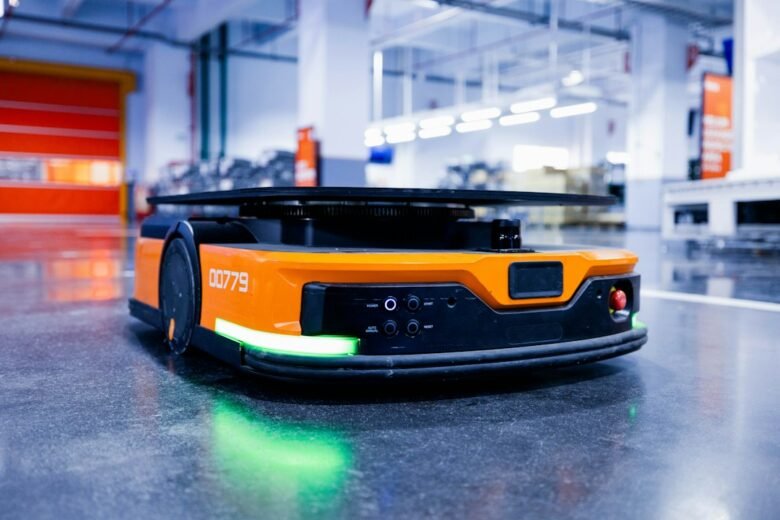
Robots moving merchandise can be stopped by dust, and one stalled machine can disrupt others, people familiar with the operations told the newspaper. Symbotic, the Massachusetts company supplying Walmart’s main warehouse system, told the Journal that the share of its robots under repair fell from less than 10% last year to about 5% in recent months.
Large televisions and bulky bags of dog food still require human handling, the Journal reported.
Other expenses are rising. A person familiar with the operations told the Journal that monthly electricity bills at automated grocery warehouses can reach $800,000 or more during peak heating or cooling months, compared with about $250,000 when operations were more manual. Engineers maintaining the equipment also earn more than workers handling merchandise, the newspaper reported.
Walmart owns a 12.6% stake in Symbotic, according to the Journal. The companies spent years testing systems at a 1.6 million-square-foot warehouse in Brooksville, Florida, including tearing out an earlier version in 2019 and rebuilding it.
In 2022, Symbotic announced plans to install its system at all 42 of Walmart’s regional distribution centers for nonperishable merchandise by around 2030, the Journal reported. Brooksville is now about 80% automated, Montgomery told the newspaper.
Walmart’s February earnings presentation reported that 23 of those 42 centers were in various stages of automation retrofit. About 60% of stores received some automated freight, and approximately 50% of e-commerce fulfillment-center volume was automated.
Those figures were below the goals Walmart set in 2023 for the end of January 2026: about 65% of stores served by automation and about 55% of fulfillment-center volume moving through automated facilities.
By August, more than 65% of stores were receiving some automated freight, and more than half of e-commerce inventory moved through automated systems, the Journal reported.
By the numbers: Walmart’s automation goals
| Milestone | Stores | E-commerce |
|---|---|---|
| 2023 goal for Jan. 2026 | 65% | 55% |
| Reported Feb. 2026 | 60% | 50% |
| By Aug. 2026 | 65%+ | 50%+* |
Automating online orders assembled inside stores has proved harder. Walmart has spent nearly $1 billion on that effort since 2016, according to the newspaper.
Walmart agreed in 2022 to acquire Alert Innovation, the company behind its store system. The Journal put the purchase price at $400 million. Walmart sold the resulting robotics business to Symbotic in January 2025.
Symbotic’s announced terms included $200 million in cash at closing and up to $350 million in additional consideration, depending on future system orders. Under a separate agreement, Walmart agreed to pay Symbotic $520 million for development, including $230 million paid at closing. If performance criteria are met, Walmart is committed to purchasing and deploying systems for 400 store-based pickup and delivery centers.
Following the money: Walmart’s store-automation business
| Item | Amount |
|---|---|
| Walmart’s purchase of Alert Innovation (agreed 2022) | $400 million* |
| Cash Symbotic paid Walmart at closing (January 2025) | $200 million |
| Additional consideration, tied to future system orders | Up to $350 million |
| Walmart’s development payments to Symbotic | $520 million ($230 million at closing) |
| Store systems Walmart will buy if performance criteria are met | 400 |
Symbotic is testing a new version in a Dallas store. Executives said on a recent earnings call that they did not expect to move forward with a workable model until 2028, the Journal reported.
Kroger has scaled back. Last November, it announced plans to close three automated fulfillment centers and take a roughly $2.6 billion charge after its automated fulfillment network fell short of financial expectations.
Walmart employs more than 140,000 warehouse workers, according to the Journal. Executives told the newspaper that automation would eventually require fewer workers, with more remaining jobs focused on operating and repairing machines.
They said turnover could accommodate reductions without layoffs. Montgomery said sales growth could keep warehouse headcount near current levels.
Walmart wants more predictable truck arrivals and pallets packed in shelf-stocking order, with fewer empty shelves and lower labor costs. Walmart and Symbotic told the Journal that they have made progress but have not fully achieved that goal.
Montgomery said leadership and the board accept the disruptions as part of a long-term investment.
“We know that if we wait till perfect,” he told the Journal, “it’ll take too long.”
Sources
This report draws on reporting by The Wall Street Journal, along with company filings and statements. Figures attributed to the Journal are its reporting; other figures come from the sources listed below.
- The Wall Street Journal: original report on Walmart’s warehouse automation (October 2026)
- Walmart: 2023 Investment Community meeting announcement, setting the fiscal 2026 automation goals (April 4, 2023)
- Walmart: fourth-quarter fiscal 2026 earnings release (Feb. 19, 2026); the accompanying financial presentation is posted at stock.walmart.com
- Symbotic: agreement to acquire Walmart’s Advanced Systems and Robotics business (Jan. 16, 2025)
- Symbotic: completion of the acquisition and related commercial agreement (Jan. 28, 2025)
- Talk Business & Politics: Walmart’s 2022 agreement to acquire Alert Innovation (October 2022)
- Associated Press via PBS Wisconsin: Kroger closing three automated fulfillment centers (Nov. 18, 2025)
Featured image: illustrative photo, not a Walmart facility. Photo by Homa Appliances on Unsplash.