
Company says it has no indication model weights, source code or customer data were taken
An OpenAI engineer has been charged in federal court with secretly planting an audio recording device in an executive conference room at the company’s San Francisco offices, the Justice Department announced Tuesday.
Abdulrahman Alfozan, 35, a Saudi national who had worked as an OpenAI engineer since July 2025, was arrested Oct. 9 and made his initial appearance in federal court Oct. 13. He is charged with using or endeavoring to use a device to intercept oral communications. A complaint is only an allegation, and he is presumed innocent.
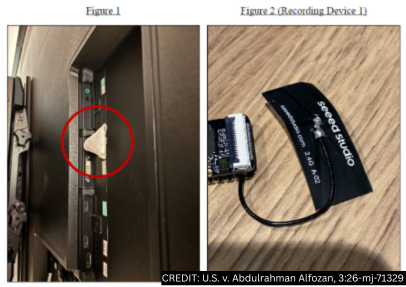
According to the complaint, OpenAI personnel found the device on or about Sept. 30, plugged into a USB port on the back of a television and concealed in toilet paper. OpenAI determined it had been installed around Sept. 28 and that its contents were encrypted. Meetings in the room frequently involved confidential research, product plans and nonpublic information about the company’s capabilities, government engagements and commercial relationships, the complaint says.
Prosecutors allege that before the installation, Alfozan used a productivity tool to ask about OpenAI’s meeting rooms, their calendars and where leadership and outside partners met. They also cite a chatbot account associated with his spouse, which shared identifiers with his own account. Between Sept. 24 and Sept. 30, that account allegedly submitted prompts about building, concealing, encrypting and remotely accessing a continuous audio recorder, including prompts about the specific device’s unique network address.
Security footage showed Alfozan near the room on multiple dates although he had no authority to enter it or attend meetings there, according to the U.S. Attorney’s Office for the Northern District of California. On Oct. 5, a camera captured him entering the room and appearing to look behind the television. The same day, OpenAI security personnel opened a bag he had left unattended in another room and found a second recording device similar to the first.
In a statement on X, OpenAI said it used its own AI models to analyze the device and identify the employee who planted it. The company said it fired him and referred the matter to the FBI, and that it had evidence he intended to place additional recording devices in sensitive areas of its offices. OpenAI said that at this time it has no indication he improperly accessed or removed model weights, source code or customer data.
Reuters reported that Alfozan has been a lawful permanent resident of the United States since September 2020. The Justice Department’s announcements describe him as a Saudi national and do not address his residency status.
Federal officials framed the case as a national security matter. FBI Director Kash Patel said Alfozan allegedly sought to capture sensitive communications about the company’s “super intelligence technology.” U.S. Attorney Craig Missakian described protecting Bay Area technology as a national security priority for his office. Prosecutors have not said what Alfozan intended to do with any recordings or who, if anyone, was meant to receive them. The announcements do not allege that he acted on behalf of a foreign government.
Alfozan remains in federal custody. A detention hearing is set for Oct. 19 before U.S. Magistrate Judge Alex G. Tse. If convicted, he faces up to five years in prison, a $250,000 fine and three years of supervised release.