
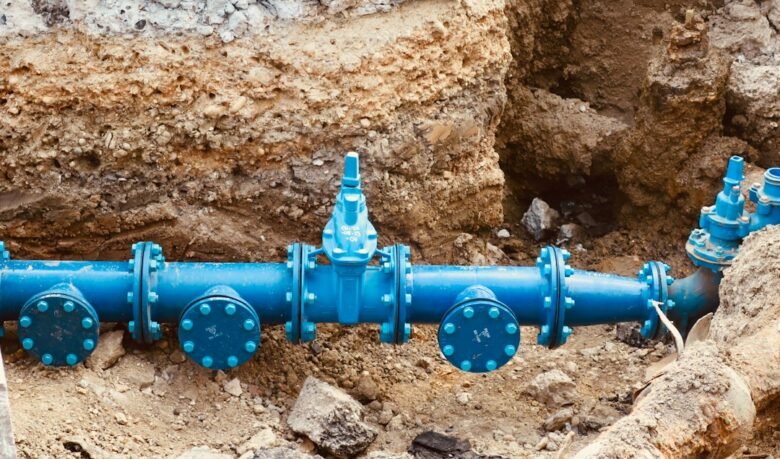
The San Antonio Water System is asking City Council to approve a four-year rate plan beginning in 2027, arguing that the additional revenue is needed to replace aging pipes, modernize decades-old wastewater facilities and preserve the utility’s financial position.
The SAWS Board approved a roughly $1.1 billion 2027 budget Tuesday. City Council is scheduled to take the final vote on the proposed water and sewer rate changes Thursday, Oct. 8.
Under the proposal, the average residential monthly bill would increase by $3.91, or 6.9%, in 2027 and another $3.94, or 6.5%, in 2028. Increases in 2029 and 2030 would fall within approved ranges, leaving the average residential bill about $13.45 to $16.93 higher per month by 2030 than it is today.
The immediate justification from SAWS is familiar: aging infrastructure costs more to maintain and eventually must be replaced. But aging is not an unforeseen event. Water mains, pumps and treatment plants have expected service lives, and a review of SAWS financial documents raises a separate question from whether the projects are needed: whether rates, reserves and replacement schedules were structured over time to prepare for predictable asset renewal before large groups of facilities reached the end of their useful lives.
Capital spending was not absent
SAWS says it completed about $2.6 billion in infrastructure improvements over the last five years without increasing its core residential water and wastewater rates. The utility’s 2024 budget included more than $567 million in capital spending, and its 2025 budget included more than $625 million.
The pattern goes back further. SAWS budgeted about $609 million for capital projects in 2020, including roughly $413 million for wastewater work. Its five-year plan at the time projected about $2.6 billion in capital improvements.
That record undercuts the idea that San Antonio simply stopped spending on infrastructure. The more relevant question is whether SAWS funded predictable renewal at a pace consistent with the deterioration of its assets, or repeatedly postponed replacement work to hold rates down until larger increases became necessary.
SAWS has reserves, but they are not a depreciation-funded replacement account
SAWS does maintain a Renewal and Replacement Fund. Its 2026 budget projects $235.7 million available for transfer to that fund, including $153 million restricted for capital-improvement use. After planned capital-outlay spending, SAWS expected about $58.9 million in additional unrestricted funds to remain available for pay-as-you-go capital work in 2027 and later years.
But the funding policy is not tied directly to the amount of infrastructure consumed each year. SAWS policy requires a minimum annual transfer to the Renewal and Replacement Fund equal to the amount transferred to the City of San Antonio’s General Fund. The utility separately targets roughly 300 days of unrestricted cash on hand, but that is a broad liquidity measure, not a dedicated sinking fund calibrated to the future replacement cost of pipes, pumps and treatment plants.
Most notably, SAWS states in its 2026 budget that it does not formally budget for depreciation and amortization, even though it depreciates capital assets for financial-reporting purposes and assumes an estimated 50-year average useful life for groups of distribution mains.
That accounting choice does not mean SAWS ignored replacement needs or that every dollar of depreciation should have been held in cash. Long-lived utility assets are commonly financed partly with debt so that future customers who benefit from them share the cost. But public-finance guidance emphasizes the need for explicit capital-renewal policies, lifecycle planning and reserves linked to anticipated replacement needs. The Government Finance Officers Association recommends written renewal-and-replacement reserve policies and notes that annual contributions can be tied to depreciation or other measures of expected capital need.
SAWS deliberately deferred hundreds of millions in known projects
The clearest evidence that some of today’s pressure reflects prior scheduling decisions appears in SAWS’s own 2026 budget. To produce a budget without a core water and wastewater rate increase, the utility said it strategically reduced its 2026 capital program to $258 million by deferring $349.8 million in planned projects, including major treatment-facility investments and water- and sewer-main replacements. SAWS simultaneously warned that funding would have to rise in 2027 and later years.
That does not mean all deferred work should have been completed immediately. Capital programs routinely sequence projects according to risk, engineering readiness and available financing. But it means at least part of the current rate request is tied to work SAWS already knew was coming and consciously moved into later years.
SAWS officials have also pointed to major commitments that competed for financial capacity, including more than $1 billion in sewer-system work required under a federal consent decree and the expansion of San Antonio’s water supply. Vista Ridge, however, requires an important distinction. The 142-mile pipeline was developed through a public-private structure, and SAWS financial statements said any debt issued by Vista Ridge LLC was non-recourse to SAWS. City Council separately approved increases to the Water Supply Fee for 2017 through 2020 to support completion of Vista Ridge and other water-supply projects.
That makes it misleading to portray Vista Ridge simply as money that otherwise would have sat in an ordinary replacement reserve. Its financing and customer charge were structured separately. The more relevant question is whether SAWS’s core water and wastewater rates and Renewal and Replacement Fund were adequate over the same period to keep pace with predictable deterioration elsewhere in the system.
At the same time, SAWS was under a federal consent decree requiring extensive work to reduce sanitary sewer overflows. The utility’s 2020 five-year capital plan devoted more than half of projected spending to sewer-overflow and consent-decree projects, while water-main replacement represented a much smaller share.
SAWS also used cash reserves as part of its rate strategy. Its 2020 budget said more than $300 million in existing cash balances would be committed to capital work in part to reduce the need for additional wastewater rate increases while customers were already absorbing water-supply increases. SAWS acknowledged at the time that the strategy would weaken liquidity somewhat but said it would reduce borrowing and help limit rate increases.
In other words, aging infrastructure was known and capital spending continued, but SAWS deliberately sequenced projects and financing to balance competing priorities and rate pressure. Some of the work now described as urgent was pushed into later years rather than newly discovered.
What is considered urgent now
SAWS says several wastewater facilities date to the 1960s and contain equipment approaching or already at the end of its useful life. Earlier presentations to City Council identified major work at the Steven M. Clouse Water Recycling Center, large sewer mains that are 40 to 50 years old and emergency-generator projects required under Texas law following Winter Storm Uri.
Wastewater remains the largest near-term priority in the revised plan. SAWS told City Council on Sept. 30 that about $450 million of its roughly $567 million 2027 capital program would go toward wastewater infrastructure, primarily treatment facilities.
The utility is also preserving a plan to replace 77 miles of its worst-condition water mains. That figure briefly fell to about 40 miles when SAWS cut its capital plan after City Council delayed the original rate proposal in June. After council members objected, SAWS restored all 77 miles by reducing or postponing other projects.
That change is significant because water loss has been one of the most visible criticisms of the utility. SAWS says it reduced total water-loss volume by 26% between 2023 and 2025, or about 5.4 billion gallons, through faster leak repairs, better metering, predictive maintenance and targeted pipe replacement. Its longer-term goal is to cut daily water loss per connection in half by 2035.
Revised plan cuts nearly $600 million
The infrastructure plan City Council will consider is smaller than the version presented earlier this year. SAWS originally proposed about $3.2 billion in five-year capital spending. After Council delayed the rate increase in June, the utility reduced the plan by roughly $594 million to about $2.6 billion.
SAWS initially proposed cutting about $223 million from planned water-main replacements, reducing the replacement program from 77 miles to roughly 40. That portion was later restored. SAWS President and CEO Robert Puente told council members that the seven highest-priority projects remained on schedule, while lower-ranked projects would be phased into later years or postponed.
The result is not a plan in which every identified infrastructure need is funded. It is a triage plan built around the projects SAWS considers most important for regulatory compliance, system reliability, water loss and public health.
Affordability and accountability remain part of the debate
Several council members who resisted the earlier rate proposal did not dispute that SAWS has infrastructure needs. Their objections focused instead on whether the utility had demonstrated that it was using existing revenue efficiently and whether customers should be asked to pay more before management and project-delivery concerns were addressed.
District 10 Councilman Marc Whyte said during the June debate that residents deserved a more detailed explanation of what was driving the increase and whether SAWS was operating efficiently. District 4 Councilman Edward Mungia similarly said infrastructure needs were real but argued that council should have confidence that additional revenue would produce measurable results.
SAWS later commissioned an outside review of its capital program. In its September presentation, the utility said the first phase found that SAWS compared favorably with other utilities in several areas of capital-program performance but also identified opportunities to improve governance, communication, planning and stakeholder engagement.
The proposal also expands protections for lower-income customers. SAWS says customers enrolled in its Uplift affordability program would not receive the proposed rate increase, and eligibility is being expanded to households earning up to 150% of the federal poverty level.
The rate request arrives as San Antonio residents face other increases in local government costs. City Council recently approved the city’s first property-tax rate increase in more than three decades, adding to the political pressure on council members weighing another multiyear increase in a basic household utility.
The decision before council
The case before City Council is therefore not simply whether aging infrastructure needs to be replaced. It does. The harder question is whether SAWS’s long-term financial model collected and reserved enough from customers over the useful lives of those assets to keep replacement on schedule, or whether rate stability was partly achieved by pushing predictable capital costs into later years.
SAWS can point to substantial past capital spending, strong liquidity targets, a Renewal and Replacement Fund and legitimate reasons to use debt for long-lived infrastructure. But its own budget also says depreciation is not formally budgeted, ties the minimum replacement-fund transfer to the City General Fund payment rather than to asset depreciation or estimated replacement cost, and shows that $349.8 million in known 2026 capital work was deferred specifically to avoid a rate increase.
Those facts do not prove the proposed increase is unnecessary. They do give City Council a stronger basis to ask whether the current rate hike reflects unavoidable new costs, earlier decisions to postpone renewal, or some combination of both.
City Council is scheduled to make that decision Thursday.
Featured image: Rose Galloway Green / Unsplash.